ECRA License: # 7017156

How Many Pot Lights Do I Need for My Mississauga Home?

Planning pot light installation for your Mississauga home involves more than simply deciding you want modern lighting. The number of pot lights needed depends on room size, ceiling height, intended use, and the specific lighting goals for each space.
Getting the calculation right ensures adequate illumination while avoiding the over-lit appearance that makes spaces feel harsh and uninviting.
Professional pot light planning creates balanced lighting that enhances your home’s architecture while providing practical illumination for daily activities. Whether you’re updating a Streetsville heritage home or modernizing a newer property in Erin Mills, proper pot light spacing makes the difference between professional results and amateur-looking installations.
Understanding Pot Light Spacing Fundamentals
Proper pot light spacing follows established lighting design principles that ensure even illumination without creating dark spots or harsh shadows.
The standard spacing formula suggests placing pot lights approximately 4-6 feet apart. However, this general rule requires adjustment based on your specific room characteristics.
Ceiling height significantly affects spacing requirements. Higher ceilings need closer spacing to prevent dark areas between lights, while standard 8-foot ceilings can accommodate wider spacing.
Room function determines lighting intensity needs. Kitchen task areas require brighter, more closely spaced lighting than bedroom areas designed for relaxation.
Living rooms benefit from layered lighting that combines pot lights with other fixtures rather than relying solely on recessed lighting for all illumination needs.
Pot light placement should consider existing architectural features like ceiling fans, smoke detectors, and HVAC vents. These obstructions affect both placement options and electrical installation requirements, influencing the total number of lights needed to achieve proper coverage.
How We Calculate Pot Light Requirements
Our pot light planning process includes:
- Room measurement and ceiling height assessment
- Function-based lighting level calculations
- Integration with existing electrical circuits and switches
- Compliance with Ontario electrical codes and permit requirements
Individual pot light needs vary based on room layout, ceiling features, existing lighting, and personal preferences.
Room-by-Room Pot Light Planning
Kitchen Pot Light Requirements
Kitchens demand the highest number of pot lights due to task-oriented lighting needs and safety requirements.
A typical 12×12 kitchen needs 8-12 pot lights depending on layout and existing lighting. Counter work areas require pot lights spaced 24-30 inches apart to eliminate shadows when working. Island areas need dedicated lighting separate from general kitchen illumination.
Kitchen pot lights work best when combined with under-cabinet lighting rather than serving as the sole light source. This layered approach provides both general illumination and focused task lighting where food preparation occurs.
Many Mississauga homeowners installing pot lights in kitchen renovations discover they need more lights than initially expected to achieve adequate work area brightness.
Avoid placing pot lights directly over sink areas where they create glare on stainless steel surfaces. Instead, position lights to illuminate work areas from multiple angles, reducing harsh shadows that make kitchen tasks difficult.
Living Room Pot Light Layout
Living rooms require fewer pot lights because they serve multiple functions and benefit from varied lighting sources.
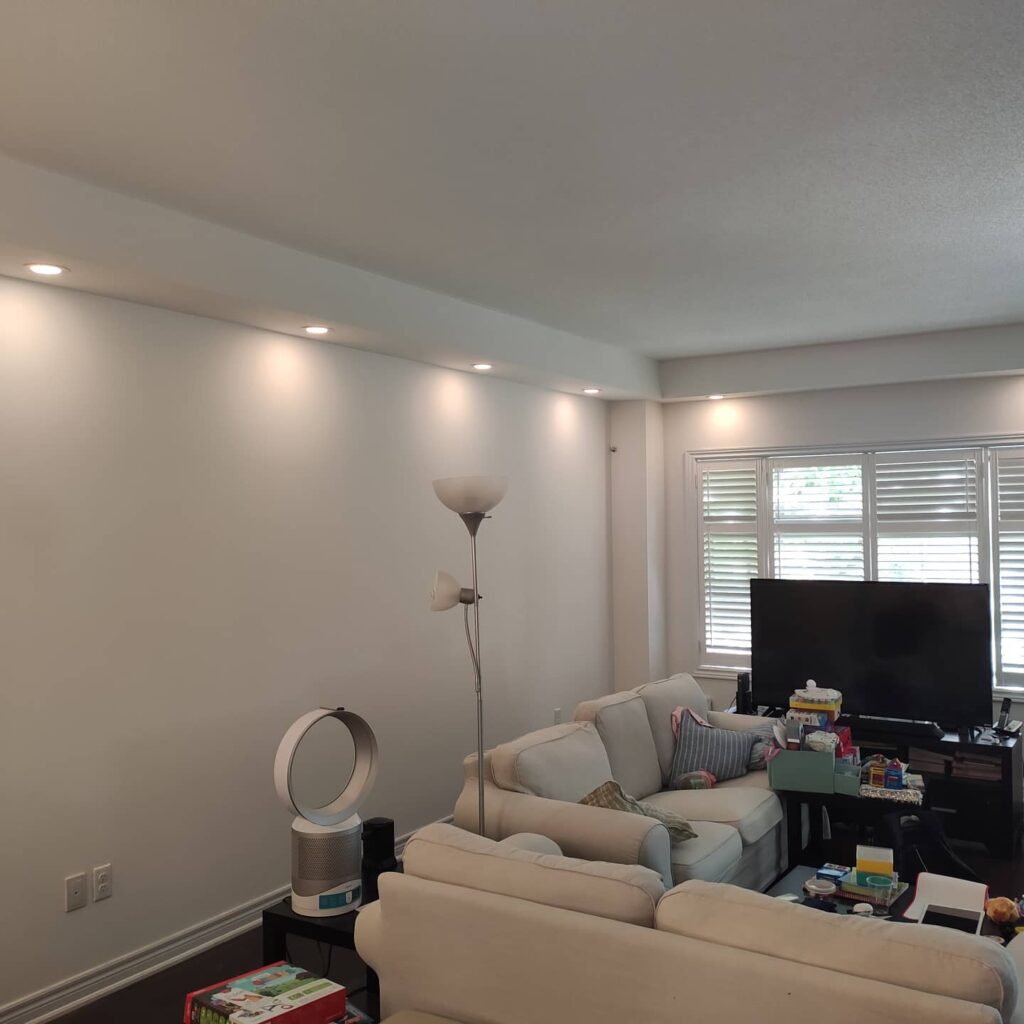
A standard 14×16 living room typically needs 6-8 pot lights for ambient lighting. These should be supplemented by table lamps, floor lamps, or wall sconces for accent lighting. Pot lights in living areas should provide even background illumination rather than bright task lighting.
Consider furniture placement when planning living room pot lights. Lights positioned over seating areas can create uncomfortable glare for people watching television or reading.
Instead, focus pot lights on traffic areas and room perimeter. Allow other fixtures to provide task lighting near furniture.
Living rooms in open concept homes require careful coordination between pot light zones. This creates smooth lighting transitions between kitchen, dining, and living areas. This integrated approach prevents the choppy appearance that occurs when each area has dramatically different lighting levels.
Bedroom Pot Light Considerations
Bedrooms need minimal pot lighting because they serve primarily as rest and relaxation spaces.
A typical 12×14 master bedroom needs only 4-6 pot lights for general illumination. Bedrooms benefit more from multiple switching zones that allow different lighting levels for various activities. Consider separate switches for pot lights over dressing areas versus general room lighting.
Avoid placing pot lights directly over the bed area where they create glare for people lying down. Instead, position bedroom pot lights to illuminate closet areas, seating areas, and pathways while keeping the bed area more softly lit.
Many Mississauga homeowners find that bedrooms work better with fewer pot lights supplemented by bedside lamps. Reading lights or accent lighting creates a more relaxing atmosphere than bright overhead illumination.
Bathroom Pot Light Planning
Bathrooms require strategic pot light placement to provide adequate illumination while avoiding glare and shadows.
Small powder rooms (5×6 feet) typically need 2-3 pot lights. Larger bathrooms (8×10 feet) require 4-6 lights depending on layout. Bathroom pot lights must be rated for wet locations and installed according to Ontario electrical codes for bathroom safety.
Shower and tub areas need dedicated pot lighting positioned to illuminate these spaces without creating shadows when people stand in normal positions. Vanity areas benefit from pot lights positioned to supplement mirror lighting rather than replace it entirely.
Consider dimmer switches for bathroom pot lights to provide bright illumination for grooming tasks and softer lighting for relaxation. Many bathroom renovations in Mississauga include dimming capability as standard equipment for pot light installations.
Ceiling Height Impact on Pot Light Planning
Ceiling height dramatically affects both pot light spacing and the total number of lights required for adequate illumination.
Standard 8-foot ceilings work well with 4-6 foot spacing between pot lights. Most residential applications use 5-inch or 6-inch pot lights that provide good coverage without overwhelming the space. Standard ceiling heights typically require the fewest total lights because illumination doesn’t need to travel far to reach task surfaces.
9-foot ceilings require slightly closer spacing (4-5 feet apart) to prevent dark spots between lights. The additional ceiling height allows larger rooms to use fewer pot lights while maintaining adequate illumination, but spacing becomes more critical to avoid uneven lighting.
10+ foot ceilings need the closest spacing (3-4 feet apart) and often benefit from higher-wattage LED bulbs to provide adequate illumination at task level. High ceilings may require more total pot lights than initially expected because light intensity decreases significantly over longer distances.
Many heritage homes in areas like Streetsville feature high ceilings that require professional lighting design to achieve proper illumination without excessive pot light quantities that overwhelm the architectural character.
Pot Light Types and Their Coverage Areas
Different pot light sizes and beam angles affect coverage area and influence the total number of lights needed.
4-inch pot lights provide focused illumination suitable for accent lighting or small areas. These smaller fixtures typically require closer spacing but work well in areas where larger lights would overwhelm the space. Four-inch lights are popular for hallway lighting and small bathroom applications.
5-inch pot lights offer the best balance of coverage and appearance for most residential applications. They provide adequate light spread for general illumination while maintaining a proportional appearance in standard ceiling heights. Most Mississauga homes use 5-inch pot lights for primary living areas.
6-inch pot lights provide broader coverage areas and work well in larger rooms or higher ceilings. They require wider spacing than smaller lights but may overwhelm smaller rooms or create an industrial appearance inappropriate for residential settings.
Adjustable vs. fixed pot lights affect coverage patterns and total light requirements. Adjustable lights allow directional lighting that can reduce total light quantities in some applications, while fixed lights require more strategic placement to achieve similar results.
Understanding professional pot light installation in Mississauga ensures proper fixture selection and placement for your specific home requirements.
Electrical Considerations for Pot Light Installation
Pot light quantity affects electrical circuit requirements and installation complexity.
Most pot lights draw 8-15 watts with LED bulbs, allowing 15-20 lights per 15-amp circuit depending on other electrical loads. Large pot light installations may require dedicated circuits to avoid overloading existing electrical systems, particularly in older homes where circuits serve multiple purposes.
Dimmer switches compatible with LED pot lights require specific equipment that differs from traditional incandescent dimmers. Plan for dimmer compatibility when calculating total installation costs, as LED-compatible dimmers cost more than standard switches but provide significantly better performance.
Pot light installation often requires electrical permits depending on the scope of work and whether new circuits are needed. Working with licensed electricians ensures proper electrical connections and code compliance for pot light projects.
Many Mississauga homes require electrical panel upgrades when adding significant pot light quantities, particularly if other electrical improvements are planned simultaneously.
Common Pot Light Planning Mistakes
Several common errors result in pot light installations that require expensive corrections.
Too many pot lights creates harsh, over-lit environments that feel more like retail spaces than comfortable homes. This mistake typically occurs when homeowners assume more lights always provide better results. Professional lighting design balances pot lights with other light sources to create layered illumination.
Inadequate spacing leaves dark areas between lights that create an uneven, spotty appearance. This problem frequently occurs when homeowners try to minimize installation costs by reducing light quantities below recommended levels.
Ignoring ceiling obstructions during planning phase leads to awkward pot light placement that compromises both appearance and function. HVAC ducts, plumbing lines, and structural elements affect pot light placement options and should be identified before finalizing installation plans.
Incompatible switch locations force awkward switching arrangements that reduce pot light functionality. Plan switch locations during design phase to ensure convenient control of different pot light zones within each room.
Integration with Existing Lighting Systems
Pot lights work best when integrated with existing lighting rather than replacing all other light sources.
Layered lighting approaches combine pot lights with pendant fixtures, table lamps, and accent lighting to create flexible illumination options for different activities and times of day. This approach provides better overall lighting than relying solely on pot lights for all illumination needs.
Existing electrical circuits may accommodate additional pot lights without requiring new electrical work, depending on current electrical loads and circuit capacity. Professional electrical assessment determines whether existing circuits can safely handle additional pot light loads.
Smart home integration allows pot lights to work with automated lighting systems that adjust brightness and color temperature throughout the day. Many Mississauga homeowners incorporate smart switches and controls when installing pot lights to maximize convenience and energy efficiency.
For comprehensive electrical work that supports pot light installation, reliable electrical repair services in Mississauga ensure proper integration with existing home electrical systems.
Cost Factors for Different Pot Light Quantities
Pot light installation costs vary based on the number of lights and installation complexity.
Small installations (4-8 pot lights) typically cost $800-$1,600 including labor and materials. These projects often work within existing electrical circuits and require minimal electrical modifications.
Medium installations (8-16 pot lights) range from $1,600-$3,200 and may require additional electrical work depending on existing circuit capacity. Multiple room installations often provide better per-light pricing than small single-room projects.
Large installations (16+ pot lights) cost $3,200-$6,000 and frequently require dedicated electrical circuits, upgraded switches, and more extensive electrical work. Whole-home pot light projects often coordinate with other electrical improvements for better overall value.
Installation complexity affects pricing regardless of light quantities. High ceilings, difficult access, insulation considerations, and integration with existing electrical systems influence total project costs beyond basic per-light pricing.
Planning Your Pot Light Installation Project
Strategic planning ensures pot light installations meet both current needs and future requirements.
Coordinate with other renovations to minimize disruption and reduce installation costs. Kitchen renovations, ceiling work, or electrical upgrades provide opportunities to install pot lights more efficiently than standalone projects.
Consider long-term lighting needs when planning pot light quantities. Anticipate furniture rearrangements, room function changes, or future renovations that might affect optimal pot light placement.
Schedule professional consultation before finalizing pot light plans. Licensed electricians provide expertise about electrical requirements, permit needs, and installation challenges that affect both pot light quantities and total project costs.
Plan for quality materials that provide long-term performance rather than minimizing upfront costs. LED pot light fixtures and professional installation provide better long-term value than cheap fixtures that require frequent replacement.
Get Professional Pot Light Planning for Your Mississauga Home
Determining the right number of pot lights for your home requires balancing lighting functionality, aesthetic appeal, and electrical system capacity. Whether you’re updating a single room or planning whole-home lighting improvements, professional planning ensures optimal results that enhance your home’s comfort and value.
At Effective Wiring, we provide comprehensive pot light planning and installation services for Mississauga homeowners. Our licensed electricians assess your home’s specific requirements and recommend pot light quantities and placement that achieve your lighting goals while working within your electrical system’s capabilities.
Contact Effective Wiring today for:
- Professional pot light planning and design consultation
- Expert installation with proper spacing and electrical integration
- Quality LED pot light fixtures with warranty coverage
- Licensed electrical work that meets Ontario codes and permit requirements
- Comprehensive lighting solutions that enhance your home’s appeal
Call us at (416) 841-7835 or visit our website to schedule your pot light consultation. Let us help you create the perfect lighting environment for your Mississauga home with professional pot light planning and installation.